
What helps flat pack builds go more smoothly
Checked before the first screw
Panels, fixings and orientation are reviewed to avoid costly reversals.
Built in stages
Frames, shelves, drawers and doors are assembled in the right order.
Adjusted at the end
Level, alignment, movement and stability are checked once built.
From boxed parts to usable furniture
Flat-pack furniture has a talent for looking simple on the box and less friendly on the floor. We assemble common items such as wardrobes, beds, drawer units, desks, tables and storage pieces from boxed components and manufacturer instructions. The build goes more smoothly when panels, fixings and orientations are checked at the start, because one reversed board can turn a short job into a long afternoon. With Unique Home Improvements on the assembly, larger items can also be planned around the room itself, so there is enough floor space to build and enough thought given to where the finished piece needs to sit.
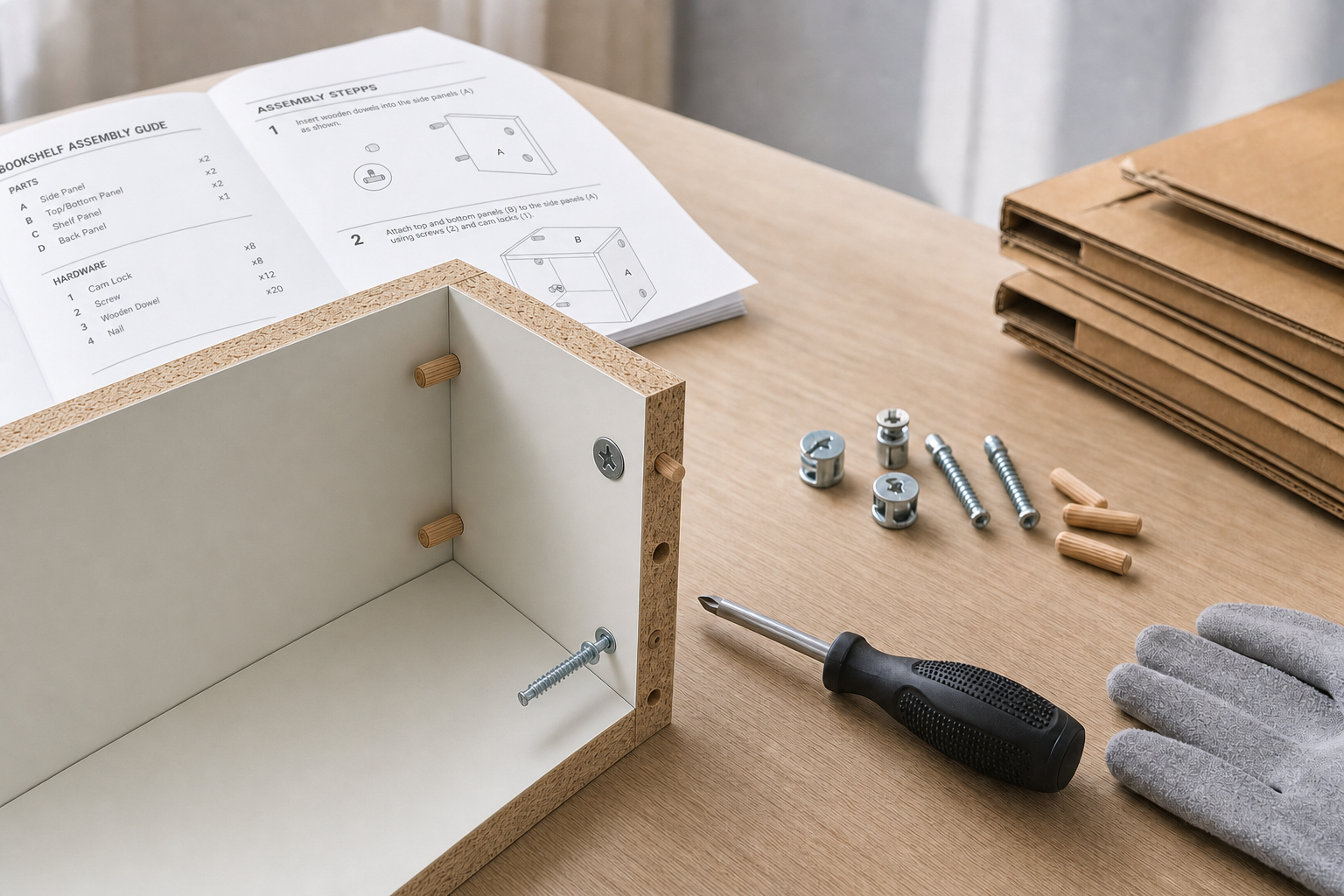
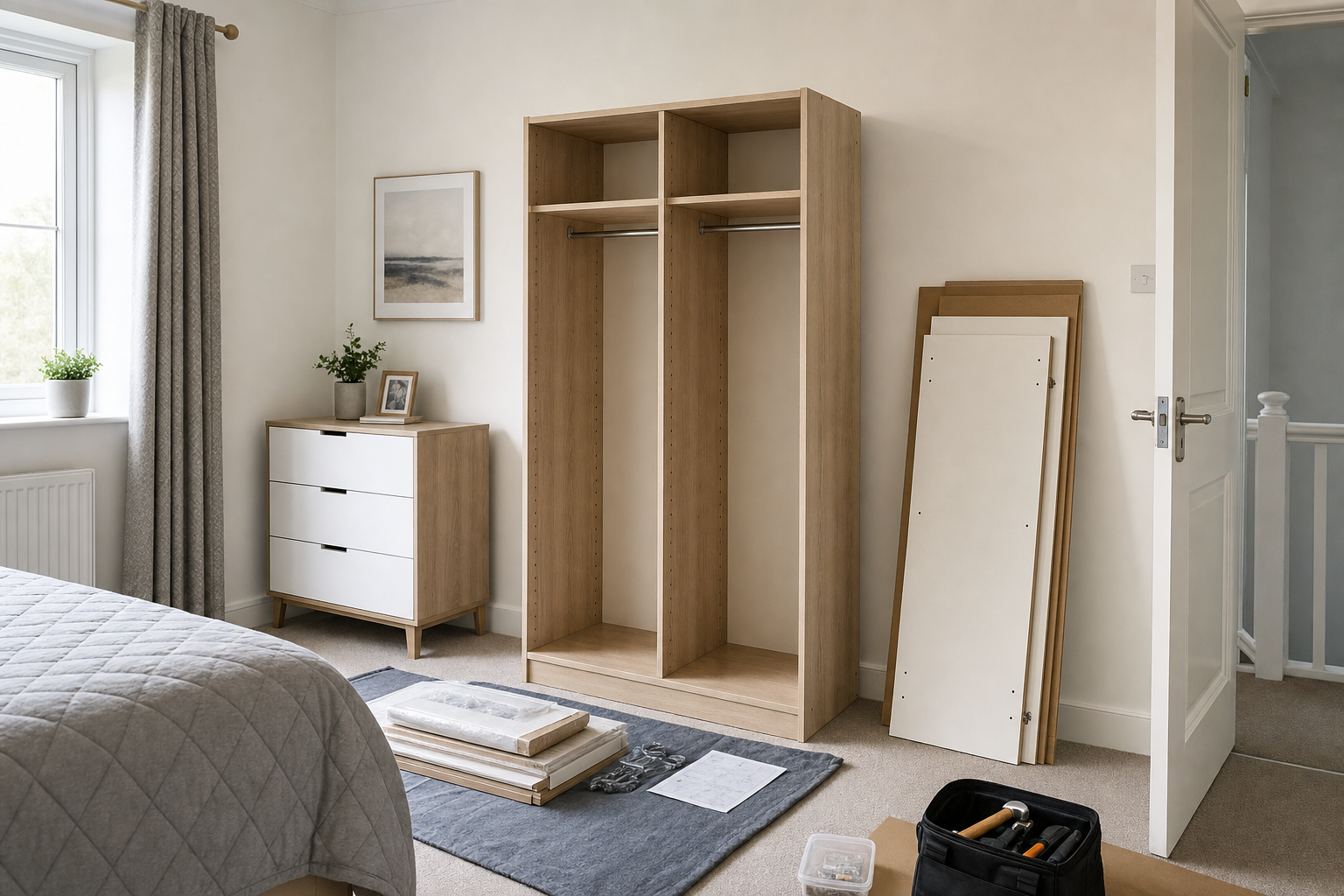
Built in stages and adjusted at the end
The work is done in stages so the frame goes together properly before shelves, drawers, doors or other parts are added. Connections are tightened evenly, not forced too soon, which helps alignment later on. Once assembled, we check the item for level, door position, drawer movement and general stability. That last part matters just as much as the build, especially on furniture you use every day. For homes and rentals alike, flat pack assembly through Unique Home Improvements stays organised, steady and far less likely to end with spare screws in a mug.
Frequently asked questions
Can large items be assembled in the room where they will stay?
Yes, and for bigger pieces that is often the sensible option. Room dimensions, floor space and the furniture's final position all matter, so building it where it needs to live can prevent awkward manoeuvring later and reduce the risk of damaging walls or fittings.
What should I have ready before assembly starts?
It helps to have the boxes, manufacturer instructions and all packaged fittings available in the room, with enough floor space to lay parts out safely. If the item is replacing older furniture, clearing that area first makes the assembly far easier to organise and complete properly.
Do you check doors and drawers after assembly?
Yes. Final checks are part of the job. We look at level, door alignment, drawer movement and general stability once the piece is built. That matters because flat-pack furniture is only truly finished when it works properly, not simply when the last panel goes on.